Vibe Coding for Startups in 2026: Can You Build a Production-Ready MVP With AI?
September 5, 2026 · 30 min · Guides
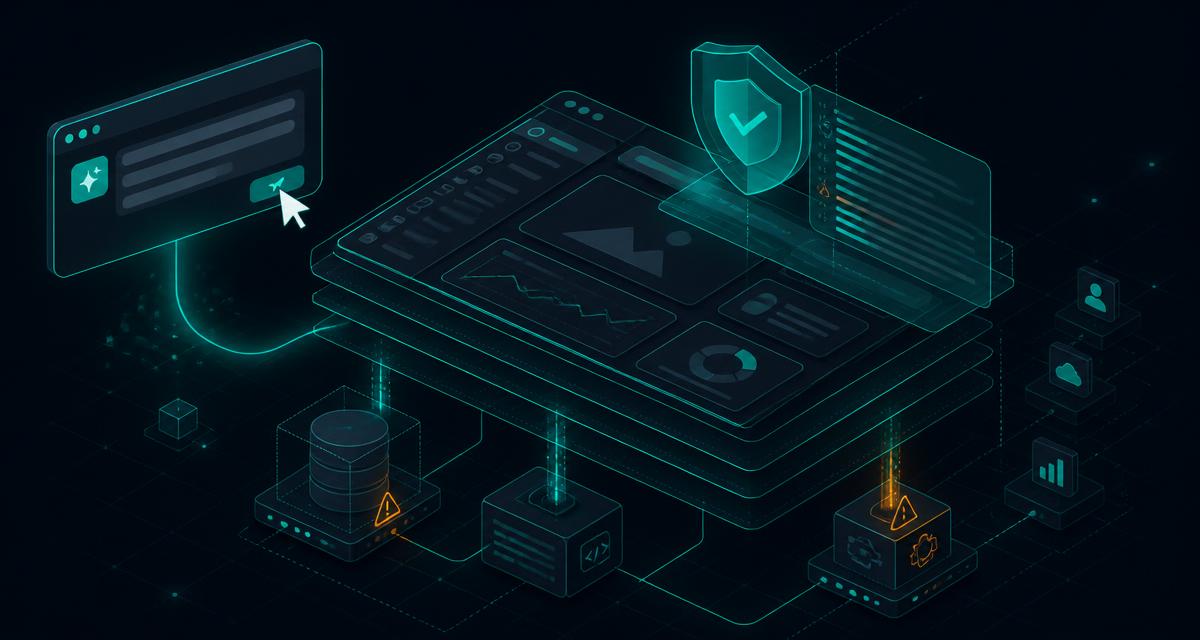
A few years ago, turning a software idea into a working product usually required technical skills, a development team, or enough funding to hire one. In 2026, that barrier is much lower.
A founder can describe an application in natural language and use AI coding tools to generate interfaces, database models, backend logic, API integrations, tests, and deployment configuration. Professional developers are using the same tools at scale. In JetBrains' 2026 Developer Ecosystem Survey of more than 15,000 professional developers, 90% reported using AI coding agents at work at least weekly, and 68% said they used them daily.[1]
That shift changes startup product development in a fundamental way. It is now possible to test an idea, build a working prototype, and reach early users with far less initial engineering effort than was required only a few years ago.
But easier implementation does not remove the difference between software that appears to work and software that can safely support a business.
An AI-generated application may look complete in a browser while still containing weak authorization rules, fragile database logic, exposed secrets, untested failure conditions, or architecture that becomes difficult to maintain as the product grows.
For startups, the important questions are therefore no longer limited to whether AI can build software. It can. The more useful questions are whether vibe coding can produce a real MVP, when an AI-generated application is ready for customers, whether it can scale, how security should be handled, and when professional engineering becomes necessary.
This guide examines those questions from a practical startup perspective. If you are still deciding what belongs in a first release at all, read it alongside our complete MVP development guide for startups. The goal is not to argue against vibe coding. It is to identify where it creates genuine leverage, where the risks change, and how founders can use AI to move faster without confusing rapid generation with production readiness.
What Is Vibe Coding?
Vibe coding is a software development approach in which a person describes what they want in natural language and an AI system generates, modifies, and often debugs the underlying code.
The term was coined by Andrej Karpathy in 2025. Google now describes vibe coding as a conversational workflow in which the user guides an AI system to generate, refine, test, and deploy software instead of manually writing each part line by line.[3]
A typical user might ask an AI coding system to:
- Create a login flow
- Build a dashboard
- Add a database
- Connect a payment provider
- Generate API endpoints
- Add an onboarding process
- Fix an error
- Modify a workflow
- Write tests
- Deploy the application
The user then evaluates the result and continues iterating through natural-language instructions.
Modern coding agents go far beyond code completion. Depending on the tool and permissions, they may inspect an existing codebase, create or modify many files, install packages, run commands, execute tests, interpret errors, work through a task plan, and make repeated changes until an objective is complete. OWASP's 2026 guidance on secure coding with AI specifically addresses this newer class of tools because coding agents can now execute commands, install dependencies, edit files, access networks, and operate with substantial developer permissions.[5]
That capability is what makes vibe coding so important for startups. A non-technical founder can create functioning software much earlier in the product journey, while experienced engineers can use the same systems to reduce repetitive implementation work.
However, "vibe coding" and professional AI-driven engineering should not be treated as exactly the same thing.
Pure Vibe Coding
In its original sense, vibe coding places most of the emphasis on the outcome rather than the underlying implementation.
The workflow is often:
- Describe the feature.
- Let the AI build it.
- Run the application.
- Check whether it appears to work.
- Describe what should change.
- Let the AI modify the code.
- Repeat.
The user may rarely inspect the underlying code.
That can be extremely effective for prototypes, landing pages, small internal tools, early product experiments, and other situations where speed matters more than long-term technical control.
The risk increases once the software begins handling real customer data, payments, complex permissions, or business-critical workflows. A feature can look correct while containing problems that normal interface testing will never reveal.
Vibe Coding vs Agentic Engineering
In 2026, a more useful distinction has emerged between vibe coding and what is increasingly called agentic engineering.
IBM defines agentic engineering as the practice of using engineering expertise to orchestrate and oversee AI agents through the software development process.[2] The coding agents may still generate a large portion of the implementation, but experienced engineers remain responsible for defining requirements, reviewing architecture, testing the resulting system, verifying security, and deciding what is allowed to reach production.
The difference is not whether AI writes the code.
It is who owns the technical decisions.
In pure vibe coding, the user may delegate both implementation and much of the understanding of the system. In agentic engineering, the AI can perform extensive implementation work while humans retain technical ownership.
That distinction becomes increasingly important as the consequences of failure increase.
An experimental internal dashboard can tolerate problems that would be unacceptable in a product handling customer records, financial data, or regulated information.
For startups, this creates a useful spectrum rather than a binary choice:
Vibe coding is strongest for rapid exploration and low-risk validation.
Agentic engineering is better suited to production systems where AI remains deeply involved but engineering review and accountability are explicit.
At Orcas Group, we use the broader phrase AI-native software development for the product-level operating model around this: using AI throughout discovery, implementation, testing, review, and iteration while retaining human ownership of architecture, security, product decisions, and production quality.
How Vibe Coding Works in 2026
A modern vibe coding workflow usually begins with an outcome rather than an implementation detail.
A founder might describe a SaaS product for managing client requests, explain who will use it, and specify the main workflow. The AI can generate an initial structure containing pages, navigation, data models, backend logic, and integrations.
From there, development becomes iterative.
Suppose the founder wants customers to upload invoices, extract supplier information, identify the amount and due date, and flag uncertain fields for manual review.
To the founder, that sounds like one feature.
Technically, the AI may need to create a file upload interface, store the document, call an extraction model, structure the response, save the result, display confidence information, handle errors, and define what happens when processing takes too long.
A simplified workflow looks like this:
- Describe the product or feature in natural language.
- Let the AI create or modify the relevant code.
- Run the application and inspect the result.
- Test the main workflow.
- Describe problems or desired changes.
- Let the AI revise the implementation.
- Repeat until the result is useful.
- Deploy to a test or production environment.
Some tools now automate much of this loop themselves. They can plan the work, modify several files, run tests, read error output, revise the implementation, and verify the result in a browser.
The development interface has become simpler, but the underlying software has not necessarily become simple.
A generated SaaS product still relies on conventional components such as databases, APIs, authentication, cloud hosting, third-party services, libraries, network requests, file storage, and monitoring. AI changes how these systems are created and connected. It does not remove the operational realities behind them.
A payment provider can fail. An API can time out. A database migration can corrupt data. A dependency can contain a vulnerability. An authentication token can expire.
The fact that an implementation was generated quickly does not make those conditions disappear.
The largest advantage of vibe coding is therefore not only the speed of producing the first version. It is the speed of changing it.
A founder can test several onboarding flows in a day. A product team can create a working version of a questionable idea before committing it to the roadmap. An engineer can explore several implementations without manually building each one from scratch.
For startups, that can reduce the cost of learning more than it reduces the cost of typing code.
Common Vibe Coding and Agentic Coding Tools in 2026
The tool landscape is moving quickly, so founders should avoid designing a long-term product strategy around whichever platform happens to be most popular this month.
It is still useful to understand the main categories.
Prompt-to-App Builders
These tools are designed to move quickly from a natural-language idea to a functioning application. They are particularly useful for founders, designers, product teams, and rapid experiments.
Examples include browser-based app builders and environments such as Google AI Studio and Firebase Studio, alongside a growing group of startup-focused prompt-to-app products.[3]
They are strongest when the objective is to create something visible and testable quickly.
Agentic Coding Environments
Agentic coding tools operate closer to a professional development workflow. They can inspect repositories, work across many files, run terminal commands, execute tests, debug failures, and carry out larger tasks.
JetBrains' 2026 research shows professional adoption across tools including Claude Code, Codex, GitHub Copilot, Cursor, OpenCode, and Google Antigravity, with usage changing quickly during the year.[1]
These tools are better suited to existing codebases and more substantial engineering work.
AI-Assisted IDEs and Developer Tools
A third category integrates AI directly into conventional development environments.
The developer remains close to the code but uses AI to generate functions, explain unfamiliar sections, write tests, refactor code, debug problems, and implement larger features.
For startups, the important question is not which tool has the strongest demo.
It is whether the company retains control over:
- The source repository
- Production infrastructure
- Customer data
- Database access
- Credentials
- Deployment processes
- Third-party accounts
A tool can be replaced. Loss of control over the product's technical assets is much harder to correct.
Why Vibe Coding Is So Attractive to Startups
Startups have always tried to reduce the cost of getting from an idea to something customers can actually use. Vibe coding changes that calculation because it lowers the amount of specialized implementation effort required during the earliest stages of product development.
The attraction is not simply that AI writes code faster. It is that founders can test more ideas before deciding which ones deserve significant investment.
Faster Prototyping
Wireframes and clickable prototypes are useful, but they can only approximate the behavior of a real product.
With AI-assisted development, founders can often move quickly to something that accepts input, stores information, calls external services, and produces a real result.
That changes customer research.
This is the same evidence-first logic behind our product design and development work. Instead of asking whether someone would use a hypothetical reporting tool, the startup can give the customer a working version and observe whether they complete the workflow, where they hesitate, what they ignore, and whether the result is valuable enough to bring them back.
Lower Barrier for Non-Technical Founders
A founder with deep industry knowledge can increasingly translate that knowledge directly into software.
Someone who understands how property managers handle maintenance requests, how lawyers review documents, or how logistics teams coordinate deliveries may be able to build a useful first version without first learning a programming language or assembling a complete development team.
This does not remove the need for technical expertise forever. It changes the point at which that expertise may become necessary.
A founder may build an internal scheduling tool independently. If the same tool later becomes a multi-tenant SaaS platform handling confidential customer information and payments, the engineering requirements change.
Cheaper Product Experiments
Many startup ideas fail for reasons that have nothing to do with engineering.
The problem may not matter enough. The workflow may be too complicated. Customers may not want to switch. Pricing may be wrong. A competing solution may already be good enough.
When software is expensive to build, startups naturally test fewer product ideas because every experiment becomes a meaningful investment.
Vibe coding lowers the cost of trying alternatives.
A founder can test different onboarding flows, pricing structures, dashboard layouts, customer segments, or automation ideas without turning each change into a major engineering project.
That can make early product development more empirical.
More Iteration Before Major Investment
Traditional development often encourages teams to make many decisions before implementation because changing direction later is expensive.
AI makes some of those decisions cheaper to revisit.
A recruitment startup may begin by assuming candidate ranking is its most valuable feature. After testing a working product, recruiters may show much more interest in interview summaries and follow-up automation.
If the startup can test both ideas quickly, it can invest in the one that demonstrates actual value rather than the one that looked best in a planning document.
This is one of the most important benefits of vibe coding: it can shorten the distance between product speculation and usable evidence.
What Can You Build With Vibe Coding?
Vibe coding is not equally suitable for every product.
The best candidates have familiar software patterns, a relatively narrow workflow, and limited consequences if something fails. The more a product depends on complex permissions, sensitive data, regulatory requirements, unusual infrastructure, or high-value transactions, the more important engineering oversight becomes.
| Product type | Vibe coding suitability | Engineering oversight |
|---|---|---|
| Landing page | Excellent | Minimal |
| Interactive prototype | Excellent | Minimal |
| Internal business tool | Very good | Low to moderate |
| Simple CRUD application | Very good | Moderate |
| Basic SaaS MVP | Good | Moderate |
| AI utility or workflow tool | Good | Moderate |
| Mobile MVP | Conditional | Moderate |
| Marketplace | Conditional | High |
| Multi-tenant SaaS | Conditional | High |
| Fintech product | Low without experts | Very high |
| Healthtech product | Low without experts | Very high |
| Enterprise platform | Best as a hybrid approach | Very high |
| High-scale production system | Best as a hybrid approach | Very high |
These categories are not absolute. A narrow fintech prototype with test data may be safer to build than an internal tool that controls sensitive production systems.
The important variables are what the product does, what data it handles, and what happens when it fails.
Landing Pages, Prototypes, and Validation Experiments
These are among the strongest use cases.
The requirements are usually familiar, the consequence of failure is limited, and the primary objective is learning.
A founder can use AI to create multiple versions of a landing page, test a user journey, demonstrate a product concept, or simulate the central workflow before committing to a full product.
Internal Tools
Internal dashboards, reporting tools, approval workflows, small CRM systems, and administrative utilities are also good candidates.
The user group is usually known, access can be controlled, and some manual intervention is acceptable while the workflow is still being refined.
That does not mean internal tools require no security. Sensitive company or customer data still needs appropriate access controls. The difference is that the operating environment is usually easier to manage than a public product.
SaaS MVPs
A focused SaaS MVP is often a good fit for vibe coding.
The first version may need user accounts, one core workflow, a dashboard, basic data storage, subscription billing, email notifications, and simple administration.
Complexity increases when the product adds multiple customer organizations, account ownership, invitations, granular permissions, multiple billing states, custom roles, or enterprise requirements.
A vibe-coded SaaS MVP can be entirely viable. It simply requires stronger review as the business consequences become more serious.
AI Products
AI utilities, document workflows, research assistants, extraction tools, classification systems, and internal copilots can often be assembled quickly using existing model APIs and standard application components.
The difficult part is usually not connecting the model.
It is deciding when the output is reliable enough to influence a real workflow.
Production AI products need to consider output quality, hallucination, prompt injection, privacy, evaluation, latency, human review, failure handling, and cost.
Marketplaces and Multi-Tenant Platforms
These products often look simpler than they are.
A marketplace may begin with profiles, listings, search, messaging, and payments, but quickly expands into refunds, disputes, payouts, moderation, ratings, identity verification, fraud controls, and multiple user roles.
Multi-tenant SaaS adds another critical requirement: one customer must never gain access to another customer's data.
Vibe coding remains useful, but the application increasingly benefits from deliberate architecture and security review.
Regulated and Enterprise Products
Fintech, healthtech, legal systems, enterprise SaaS, and other products handling sensitive data can use AI-assisted development extensively.
They are poor candidates for unsupervised production deployment.
These systems may require strong access controls, auditability, data retention rules, compliance obligations, identity verification, SSO, custom permissions, security reviews, and defined incident procedures.
AI can accelerate implementation. It does not remove accountability for those requirements.
Can You Build an MVP With Vibe Coding?
Yes.
For many startups, vibe coding is now one of the fastest ways to build an MVP. The important question is what the MVP is expected to prove.
If the goal is to test whether users understand a workflow, care about the problem, return to the product, or are willing to pay for a simple solution, a vibe-coded product may be entirely sufficient.
If the same MVP is expected to handle sensitive customer data, financial transactions, complex permissions, or business-critical processes, production requirements become more demanding.
Validation-Ready MVP vs Production-Ready MVP
The distinction is useful because the term MVP is often used for very different stages.
| Stage | Main question |
|---|---|
| Prototype | Can we demonstrate the idea and test the experience? |
| Validation-ready MVP | Will real users receive enough value to validate the hypothesis? |
| Production-ready MVP | Can customers use the limited product safely and reliably? |
| Scalable product | Can the product support growing usage, features, customers, and teams? |
A validation-ready MVP is built primarily to test an assumption.
Imagine a recruitment startup that lets users upload candidate profiles and receive AI-generated summaries. The first version may need only user registration, document upload, AI processing, a results page, and basic analytics.
If ten recruitment firms use it repeatedly and report meaningful time savings, the product has generated useful evidence.
A production-ready version of the same product must answer additional questions. Can one recruitment firm ever access another company's candidates? Who can delete records? How are documents protected? What happens if AI processing fails halfway through? How are backups handled? What happens if the model provider is unavailable?
Those requirements may add little visible functionality, but they determine whether customers can trust what already exists.
A production-ready MVP therefore has two types of scope:
Product scope should remain narrow.
Operational scope must be sufficient to support that product safely.
The MVP principle is useful for removing unnecessary product complexity. It should not be used to remove the foundations required for dependable operation.
When a Vibe-Coded MVP Is Usually Enough
A founder can often move far without a traditional development team when:
- The workflow is narrow
- The number of early users is small
- The consequences of failure are limited
- Data sensitivity is low
- The product relies on established services
- Manual intervention is acceptable
- The objective is validation rather than scale
Examples include lightweight research tools, internal dashboards, marketing utilities, early workflow products, and small pilot SaaS applications.
When the MVP Needs Stronger Technical Review
Technical oversight becomes more important when the product begins handling:
- Customer payments
- Financial records
- Confidential documents
- Personal or health information
- Multiple customer organizations
- Complex permissions
- High-value transactions
- Critical third-party integrations
- Important business processes
- Regulatory requirements
The same applies when a startup moves from a controlled pilot to a public launch.
A product that worked well with twenty known users may behave differently when two thousand people sign up without assistance.
Where Vibe Coding Starts to Break
The limitations of vibe coding rarely appear when the first application is generated.
They appear as the product accumulates data, integrations, users, permissions, edge cases, and business expectations.
The visible workflow may continue to work while hidden complexity grows underneath it.
Data Models Become Expensive to Change
A single-user application may later need organizations. One subscription may become several billing models. A simple status field may evolve into a multi-stage approval workflow.
Those changes are possible, but they become harder when the original data model does not match the validated product.
Once real customer data exists, database changes require migration planning, validation, rollback options, and a clear understanding of what the old structure means.
Happy-Path Testing Misses Real Failure Conditions
Vibe coding naturally encourages visible progress: add a feature, run it, confirm it works, and continue.
Production systems also need to handle situations such as:
- A payment succeeds but the webhook never arrives
- A file upload stops halfway through
- An API times out
- A user submits the same request twice
- Two people modify the same record
- A background job partially fails
- A third-party service becomes unavailable
These are not exotic edge cases. They are normal operating conditions.
Integrations Add Operational Complexity
A successful API connection proves only that the integration can work.
A production integration may also require retry logic, timeout handling, rate-limit handling, idempotency, monitoring, credential rotation, fallback behavior, logging, and clear user-facing errors.
Those requirements often become visible only after the product is used under real conditions.
Technical Debt Can Accumulate Quietly
Fast iteration is useful, but repeated generation without architectural review can leave a codebase with duplicate logic, inconsistent patterns, unnecessary dependencies, temporary workarounds, poorly separated business rules, and components that become difficult to change.
Some technical debt is normal in a startup.
The dangerous form is debt nobody realizes exists until every new feature starts taking longer.
Observability Is Easy to Ignore
Monitoring does not create an exciting new feature, so it is often added late.
As usage grows, the team needs visibility into application errors, failed background jobs, slow requests, database problems, model costs, authentication failures, and third-party outages.
Without that visibility, customers may become the monitoring system.
Maintainability Becomes an Organizational Problem
A founder can tolerate a surprising amount of complexity while working alone with an AI agent.
The situation changes when additional engineers join, ownership transfers, due diligence begins, or a production incident needs to be diagnosed quickly.
The codebase should gradually become an organizational asset that people can understand, review, test, and change. If every modification depends on asking one AI system to interpret an opaque project, the complexity has not disappeared. It has only been hidden.
Is Vibe Coding Secure?
AI-generated code is not inherently insecure.
But pure vibe coding becomes risky when generated software reaches production without the review, testing, and security controls expected of other production systems.
This matters because security weaknesses are often invisible during ordinary use.
A founder can log in, complete the main workflow, and see no obvious problems while an application still contains serious access-control, secret-management, dependency, or input-validation weaknesses.
Security is where AI-generated products most often fall short of what customers assume, and where our cybersecurity and IT services team spends most of its review time. OWASP continues to rank Broken Access Control as the number-one web application security category in its 2025 Top 10.[4] The organization's 2026 Secure Coding with AI guidance also warns that modern coding agents introduce new risks because they can install packages, execute commands, modify files, access external content, and sometimes operate with broad developer permissions.[5]
Authentication Is Not Authorization
Authentication establishes who the user is.
Authorization determines what that user is allowed to see and do.
A B2B SaaS application may have a perfectly functional login system while still failing to enforce account boundaries correctly.
Questions include:
- Can a user access another organization's records by modifying an API request?
- Are permissions enforced in the backend or only hidden in the interface?
- What happens when someone leaves an organization?
- Can administrators access more than intended?
- Are file downloads protected by the same permission model as the page that links to them?
These issues cannot be tested simply by clicking through the normal user journey.
Secrets and Credentials
Applications often depend on external services for payments, AI models, email, analytics, file storage, and authentication.
Credentials should not be embedded in frontend code, committed to public repositories, or stored where users and untrusted tools can access them.
OWASP's AI coding guidance goes further and recommends protecting development credentials from coding agents themselves, especially when those agents can inspect project files or execute terminal commands.[5]
Database Access
Managed databases make it easy to build quickly, but they still require explicit access rules.
Problems can include public tables, overly broad service credentials, weak row-level controls, or endpoints that expose more data than the visible interface suggests.
Customer isolation should be enforced by the system, not by the assumption that users will only click the buttons provided to them.
Input Validation and File Uploads
Production systems should validate information where it is processed, not only where it is entered.
File uploads create additional questions around file type, size, storage permissions, malware, metadata, retention, deletion, and who can download what.
These risks become more important when documents are sent to external AI providers for processing.
Dependency and Supply-Chain Risk
AI coding systems may install packages automatically because they accelerate implementation.
That is normal modern development, but teams still need to know which dependencies exist, whether they are maintained, whether known vulnerabilities are present, and whether every installed package is necessary.
OWASP's AI coding guidance specifically addresses hallucinated dependencies, outdated packages, prompt-to-code supply-chain risks, and unsafe autonomous package installation.[5]
AI-Specific Risks
If the product contains AI features, another security layer appears.
An AI system connected to internal data or tools may be exposed to prompt injection or manipulated into taking actions the application did not intend.
The risk grows when an agent can access email, customer records, databases, files, payment systems, or external APIs.
The principle remains familiar: give every component only the permissions it actually requires.
Security Review Should Match Consequence
Not every prototype needs a penetration test.
A personal experiment using synthetic data has a different risk profile from a public SaaS product storing confidential documents.
Professional security review becomes more important as the product handles more valuable data, more powerful permissions, more users, and more significant business actions.
IBM's 2026 analysis makes a similar distinction between free-form vibe coding and more deliberate agentic engineering, particularly when AI-generated systems move into real-world security environments.[6]
The key point is simple: a product working correctly does not prove that it is secure.
Functional testing asks whether the application does what the team intended.
Security testing also asks what an attacker can make it do that the team did not intend.
Can Vibe-Coded Apps Scale?
Yes.
Scalability depends on architecture, infrastructure, data design, and development practices rather than on whether a human or an AI originally typed the code.
It is useful to separate four types of scale.
User Scale
Higher traffic can expose slow queries, API limits, background-processing bottlenecks, file-processing problems, memory constraints, or model costs.
Many of these issues can be improved incrementally through indexing, caching, queues, asynchronous work, managed infrastructure, and better queries.
A startup rarely needs architecture for millions of users on day one. It needs an architecture that can be understood and improved when actual usage justifies the work.
Data Scale
A poor query may feel fast with a few hundred records and become unusable with hundreds of thousands.
Data growth also introduces requirements around backups, retention, search, reporting, archiving, deletion, migrations, and storage cost.
The objective is not to predict every future requirement. It is to recognize when a model designed for validation is becoming a constraint.
Product Scale
Software also scales by becoming more complicated.
One workflow becomes several modules. One user role becomes five. One integration becomes ten. A simple subscription becomes multiple pricing models and enterprise contracts.
This type of scale can become more difficult than traffic growth because every feature may begin interacting with unrelated parts of the system.
Good architecture allows the product to keep changing without making each change progressively more dangerous.
Team Scale
A product may technically support 100,000 users and still be difficult for ten engineers to maintain.
New developers need to understand how the application is structured, where business rules live, how deployments work, how the database is organized, and where known risks exist.
This is why maintainability is part of scalability.
The goal is for the codebase to become easier to share across a growing team, not increasingly dependent on one founder and one AI coding session.
Does a Vibe-Coded MVP Need to Be Rebuilt?
No, not automatically.
AI-generated code can become production code. Professional developers now use AI agents extensively themselves, so the origin of the implementation is not a useful quality test.
A successful vibe-coded MVP generally has three paths.
Keep It
Keep the existing system when:
- The architecture is understandable
- The data model fits the validated product
- Critical workflows are tested
- Security controls are appropriate
- Dependencies are maintainable
- New features can be added without repeated breakage
If the foundation is sound, rebuilding creates cost without solving a meaningful problem.
Refactor It
Refactoring is often the most practical outcome.
The team can improve the areas that create risk while preserving working product behavior.
Typical work includes:
- Separating business logic
- Consolidating duplicate functionality
- Improving the data model
- Adding automated tests
- Strengthening authorization
- Replacing temporary integrations
- Improving monitoring
- Documenting important architecture decisions
Rebuild It
A rebuild becomes reasonable when the existing foundation actively blocks continued development.
Examples include fundamental security problems that cannot be corrected safely, an incompatible data model, severe platform limitations, unmanageable code structure, licensing problems, or architecture that cannot support essential requirements.
Even then, rebuilding introduces migration risk, recreated functionality, and the possibility of reproducing old mistakes in a new codebase.
Rebuilding should be an engineering conclusion, not a sales strategy.
How Much Does Vibe Coding Cost?
The first version of a vibe-coded product can be inexpensive.
A founder may need only an AI coding subscription, hosting, a database, a domain, and several third-party services to create a functioning application.
That makes early experimentation more accessible, but the cost of generating version one is only part of the financial picture.
Typical cost categories include:
- AI coding tools
- Hosting and compute
- Database usage
- Model API usage
- Email and messaging
- Payment processing
- File storage
- Analytics and monitoring
- Security tooling
- Technical review
- Maintenance
- Refactoring
- Customer support
The cost profile also depends on how the product is built.
| Approach | Initial cost | Technical ownership | Main risk |
|---|---|---|---|
| DIY vibe coding | Very low | Founder | Unknown technical debt or security gaps |
| No-code plus AI | Low | Founder / platform | Platform limits and lock-in |
| AI plus freelancer | Low to medium | Shared | Quality depends heavily on experience |
| AI plus professional engineering | Medium | Engineering team | Higher initial spend |
| Conventional custom development | Medium to high | Engineering team | Can overinvest before validation |
The categories overlap. Professional teams also use AI, and experienced founders can build robust systems themselves.
The more useful question is not "How cheaply can we generate version one?"
It is "What will it cost to reach a reliable product and operate it at the level of usage we realistically expect?"
For a more detailed budgeting framework, compare this with a full MVP or custom software development cost estimate rather than treating vibe-coding tool subscriptions as the entire product budget. Our interactive project cost estimator prices the same variables, and if the product depends on AI features, our AI agent development cost guide breaks those out separately.
How Much Faster Is Vibe Coding?
There is no credible universal multiplier.
Some implementation tasks can be accelerated dramatically:
- Application scaffolding
- Standard UI components
- CRUD functionality
- Repetitive backend logic
- Test generation
- Documentation
- Basic integrations
- Refactoring
- Debugging common errors
Other tasks are limited less by typing speed and more by judgment:
- Customer research
- Product scope
- Architecture
- Security analysis
- Compliance
- Data modeling
- Complex debugging
- Real-world testing
JetBrains' 2026 research suggests how deeply AI generation has entered professional workflows. Developers in its survey reported that a substantial share of their code was fully agent-generated or written with AI assistance, although JetBrains appropriately notes that these figures are self-reported and should be interpreted with caution.[7]
The practical takeaway is not that every software project is now a fixed multiple faster.
It is that implementation time can shrink much more than decision-making time.
As generating code becomes cheaper, choosing what to build, what to verify, and what to trust becomes more important.
When Does a Vibe-Coded Startup Need Engineering Help?
There is no requirement that every startup hire engineers or an agency as soon as an AI-generated product works.
Many founders can continue alone for a meaningful period.
The right point to bring in technical help depends on the consequences of failure and the complexity of the system.
Continue Independently When
A founder can reasonably continue alone when:
- The product is still being validated
- Usage is limited
- The workflow is straightforward
- Data sensitivity is low
- Failure has limited consequences
- The codebase remains manageable
- Customers are not yet depending on the product for critical work
Bring in an Experienced Engineer When
Engineering review becomes valuable when:
- Payments or important customer data are involved
- Multi-tenant permissions become complicated
- The codebase is difficult to change confidently
- Reliability expectations increase
- Security questions become difficult to answer
- Several integrations are becoming operational dependencies
- Another developer needs to join the project
A good technical review should not assume the product needs rebuilding. It should identify what is sound, what needs refactoring, and what creates genuine risk.
That is exactly the scope of our custom software development engagements with founders who arrive with a working AI-generated product: assess first, then harden what the business actually depends on. If you would rather extend your team than hand the product over, our IT consulting and outsourcing model covers that too — see the complete IT outsourcing guide for 2026 for how those engagements are structured.
Bring in a Product Engineering Team When
A broader team becomes useful when the problem is no longer primarily coding.
The product may require a combination of:
- Product discovery
- UX design
- Architecture
- Multi-tenant SaaS design
- Security
- Payments
- Enterprise integrations
- Cloud infrastructure
- Compliance
- QA
- Production monitoring
- Long-term roadmap ownership
There is little value in hiring a full product team to validate a simple landing page or internal experiment.
The case becomes stronger once the startup has enough evidence that the product deserves serious investment and the next challenge is turning validated value into dependable software.
The Better Model: AI-Native Software Development
The long-term impact of vibe coding is unlikely to be a world where every product is built through unsupervised prompts.
The more durable change is that AI is becoming part of the entire development lifecycle.
This is how we build: our AI development and automation practice applies AI across discovery, implementation, testing and review while engineers keep ownership of architecture, security and production decisions.
An AI-native product team may use AI to:
- Explore requirements
- Generate prototypes
- Implement features
- Write tests
- Review code
- Analyze errors
- Create migrations
- Produce documentation
- Investigate performance
- Refactor existing systems
Human responsibility remains concentrated where business context and consequences matter most:
- Product strategy
- Architecture
- Security
- Business rules
- Data governance
- Quality standards
- Production decisions
Agentic engineering describes the technical discipline of directing coding agents while retaining engineering oversight.[2]
AI-native software development extends that model across the whole product organization.
The practical workflow becomes:
- Define the product problem clearly.
- Use AI to accelerate exploration and implementation.
- Review architecture and generated code.
- Test critical workflows and failure conditions.
- Verify security and data access.
- Deploy with monitoring and operational controls.
- Continue using AI to iterate quickly.
This avoids both extremes.
There is no reason to reject AI-generated implementation simply because a machine produced it.
There is also no reason to assume that a successful demo has removed the need for engineering discipline.
The strongest teams can use AI aggressively while remaining accountable for what the software actually does.
Vibe Coding Production-Readiness Checklist
A startup does not need every enterprise control before launching an MVP.
It should be able to answer the following questions before asking real customers to depend on the product.
Product
- Has the core workflow been tested with real users?
- Is the MVP tied to a clear business hypothesis?
- Are the actions connected to that hypothesis measured?
- Do important error states make sense to users?
Code
- Does someone understand the overall application structure?
- Has critical generated code been reviewed?
- Are major dependencies known?
- Can another engineer work on the codebase safely?
Authentication and Authorization
- Does account recovery work correctly?
- Are permissions enforced on the backend?
- Can users access another customer's records by manipulating requests?
- Have administrative permissions been tested explicitly?
Data
- Is customer data separated correctly?
- Are important fields validated?
- Are backups available where data loss would matter?
- Does the team know how data would be restored or migrated?
Security
- Are production credentials protected?
- Is sensitive information excluded from unnecessary logs?
- Are file uploads restricted appropriately?
- Are dependencies checked for known vulnerabilities?
- Are sensitive endpoints protected from obvious abuse?
AI Features
- Is the expected quality of model output understood?
- Can important AI results be reviewed where necessary?
- Have prompt injection and tool permissions been considered?
- Is sensitive information prevented from reaching external models unintentionally?
- Are model failures, latency, and costs monitored?
Testing
- Has the main workflow been tested end to end?
- Are payment flows tested where relevant?
- Have important integrations been tested under failure conditions?
- Are authorization boundaries tested?
- Can critical regressions be detected before deployment?
Infrastructure
- Are production errors monitored?
- Are important failures visible through alerts or logs?
- Is deployment repeatable?
- Is there a rollback path?
- Are hosting, database, and model costs visible?
Business and Operations
- Does someone own customer support?
- Are billing and cancellation rules clear?
- Have privacy and relevant legal obligations been considered?
- Is it clear who will maintain the product after launch?
A product does not need perfect answers to every question.
But repeated answers of "we don't know" are a strong signal that a technical review is appropriate before a broader production launch.
Should Your Startup Use Vibe Coding?
For most startups in 2026, the answer is yes in some form.
The more useful question is how far to take it without additional technical oversight.
Vibe coding is particularly effective when uncertainty is high and the consequences of failure are low. Founders should take advantage of that. There is little reason to spend months building a prototype that can now be tested much faster.
As the product becomes more valuable and more consequential, the development model should evolve with it.
A useful rule is:
Use vibe coding most aggressively when uncertainty is high and operational risk is low. Increase engineering discipline as uncertainty falls and operational risk rises.
That may mean conducting a technical review, adding an experienced engineer, improving tests, strengthening security, or moving to a broader product engineering team.
It does not necessarily mean abandoning what has already been built.
The goal is to add the level of technical control appropriate to what the product has become.
Final Takeaway
In 2026, asking whether AI can build software is becoming the wrong question.
It can.
The more important question is whether the resulting product is appropriate for what the business expects from it.
Vibe coding can reduce the cost of experimentation, accelerate MVP development, and allow founders to test more assumptions before committing significant capital. It can also produce code that remains part of a long-term product.
But customers still expect their data to remain private. Payments still need to be correct. Permissions still need to be enforced. Integrations still fail. Databases still need to evolve. Production incidents still need to be diagnosed.
The strongest approach is not to choose between AI and professional software development.
It is to use AI wherever it creates leverage while retaining human ownership of the decisions that determine whether the product is secure, maintainable, understandable, and capable of supporting growth.
For some startups, that means building almost the entire first MVP through vibe coding.
For others, it means using AI inside an experienced engineering team from the beginning.
The right point on that spectrum depends on the product, the consequences of failure, and what the startup needs to prove next.
Orcas Group works with startups and product teams across MVP and custom software development, AI implementation, software architecture, security, and post-MVP scaling. When an AI-generated product has already validated demand, the next step should not automatically be to rebuild it. It should begin by understanding what is working, what creates risk, and what the product now requires to grow reliably.
Get an Independent Review of Your AI-Built Product
If you have already shipped something with AI and customers are starting to depend on it, the useful next step is a technical review, not a rebuild. We look at authorization, data handling, secrets, testing and architecture, then tell you what is sound and what genuinely needs work. Request a review or estimate your next phase.
Frequently Asked Questions
What is vibe coding?
Vibe coding is a software development approach in which a user describes desired functionality in natural language and an AI system generates and modifies much of the underlying code. The user focuses primarily on the intended outcome rather than manually implementing every component.
What is the difference between vibe coding and agentic engineering?
Vibe coding emphasizes rapid natural-language development and may involve limited attention to the underlying implementation. Agentic engineering uses AI coding agents extensively but keeps experienced engineers responsible for architecture, verification, security, testing, and production decisions.
Can you build an MVP with vibe coding?
Yes. Vibe coding can be particularly effective for focused MVPs because it reduces the cost of turning an idea into a working product. The required level of engineering review depends on the data, permissions, transactions, and consequences involved.
Is vibe coding secure?
Vibe coding is not inherently secure or insecure. AI-generated code can meet production security requirements, but it needs deliberate access controls, secret management, dependency review, testing, monitoring, and security verification appropriate to the product's risk.
Can vibe-coded apps scale?
Yes. Scalability depends on architecture, infrastructure, data models, maintainability, and engineering practices rather than on whether AI generated the initial code. A product may require refactoring as traffic, data, features, and team size increase.
Do vibe-coded apps need to be rebuilt?
No. Some can continue largely unchanged, others benefit from targeted refactoring, and some genuinely require rebuilding. The decision should depend on the condition and limitations of the software, not simply on the fact that AI generated it.
How much does vibe coding cost?
The initial cost can be low because a founder may need only an AI coding tool, hosting, a database, and several external services. The total cost rises with security review, custom engineering, infrastructure, testing, maintenance, compliance, and scaling requirements.
Does vibe coding replace software developers?
It is more likely to change the role of developers than eliminate it. AI is taking over more implementation work, while human value shifts toward product definition, architecture, system design, review, security, debugging, and production accountability.
Can vibe coding be used for enterprise software?
Yes, but usually within an agentic engineering process rather than unsupervised development. Enterprise products often require advanced permissions, audit logs, integrations, SSO, reliability, compliance controls, and formal security review.
Is vibe coding suitable for production software?
Yes, provided the resulting system meets production requirements. The relevant questions are whether the software is secure, tested, maintainable, monitored, understandable, and reliable enough for its intended users and business consequences.
Sources
- JetBrains, "AI Coding Agents: Adoption Trends," August 2026
- IBM, "What is agentic engineering?"
- Google Cloud, "What is vibe coding?"
- OWASP, "A01:2025 Broken Access Control"
- OWASP Cheat Sheet Series, "Secure Coding with AI"
- IBM, "Vibe coding security risks aren't like ordinary security risks"
- JetBrains, "How Much Code Do Developers Really Let Agents Write?"
Frequently Asked Questions
What is vibe coding?
Vibe coding is a software development approach in which a user describes desired functionality in natural language and an AI system generates and modifies much of the underlying code. The user focuses primarily on the intended outcome rather than manually implementing every component.
What is the difference between vibe coding and agentic engineering?
Vibe coding emphasizes rapid natural-language development and may involve limited attention to the underlying implementation. Agentic engineering uses AI coding agents extensively but keeps experienced engineers responsible for architecture, verification, security, testing, and production decisions.
Can you build an MVP with vibe coding?
Yes. Vibe coding can be particularly effective for focused MVPs because it reduces the cost of turning an idea into a working product. The required level of engineering review depends on the data, permissions, transactions, and consequences involved.
Is vibe coding secure?
Vibe coding is not inherently secure or insecure. AI-generated code can meet production security requirements, but it needs deliberate access controls, secret management, dependency review, testing, monitoring, and security verification appropriate to the product's risk.
Can vibe-coded apps scale?
Yes. Scalability depends on architecture, infrastructure, data models, maintainability, and engineering practices rather than on whether AI generated the initial code. A product may require refactoring as traffic, data, features, and team size increase.
Do vibe-coded apps need to be rebuilt?
No. Some can continue largely unchanged, others benefit from targeted refactoring, and some genuinely require rebuilding. The decision should depend on the condition and limitations of the software, not simply on the fact that AI generated it.
How much does vibe coding cost?
The initial cost can be low because a founder may need only an AI coding tool, hosting, a database, and several external services. The total cost rises with security review, custom engineering, infrastructure, testing, maintenance, compliance, and scaling requirements.
Does vibe coding replace software developers?
It is more likely to change the role of developers than eliminate it. AI is taking over more implementation work, while human value shifts toward product definition, architecture, system design, review, security, debugging, and production accountability.
Can vibe coding be used for enterprise software?
Yes, but usually within an agentic engineering process rather than unsupervised development. Enterprise products often require advanced permissions, audit logs, integrations, SSO, reliability, compliance controls, and formal security review.
Is vibe coding suitable for production software?
Yes, provided the resulting system meets production requirements. The relevant questions are whether the software is secure, tested, maintainable, monitored, understandable, and reliable enough for its intended users and business consequences.